 Esperanto
 Shqiptare
 Euskara
 Zulu
Zulu
 Latinus
 Cymraeg
 தமிழ்
தமிழ்
 Slovak
 Slovak
 Afrikaans


Essential Guide to Stainless Steel Wire Mesh: Key Facts and Uses
Stainless steel wire mesh is a versatile and durable material widely used across industries due to its strength, corrosion resistance, and adaptability. It is composed mainly of stainless steel wires that are intricately interwoven to form a grid-like structure, ensuring stability and reliability.
SEO:
Stainless Steel Wire Mesh
Stainless Steel Welded Wire Mesh
Category:
Product Description
Stainless steel wire mesh is a versatile and durable material widely used across industries due to its strength, corrosion resistance, and adaptability. It is composed mainly of stainless steel wires that are intricately interwoven to form a grid-like structure, ensuring stability and reliability. In this guide, we explore the key aspects of stainless steel wire mesh, its terminology, materials, and diverse applications.
Key Terminology
Understanding specific terms related to wire mesh is crucial for selecting the right mesh for various needs:
- Mesh Count: This indicates the number of wires per square inch, e.g., "24 wires/inch." Higher mesh counts mean finer mesh with smaller openings.
- Aperture: The space between adjacent wires, which determines the mesh's filtration capacity.
- % Open Area: Represents the average opening space as a percentage, crucial for understanding flow rates in filtration.
- Warp and Weft: Warp threads run the mesh's length, while weft threads run across its width, contributing to the mesh's overall structure.
- Mesh Thickness: Measured in millimeters, it refers to the thickness of the mesh, which varies based on wire diameter.
Materials Used in Stainless Steel Wire Mesh
Stainless steel wire mesh is commonly manufactured using a variety of metals, depending on the intended use. Here’s an overview of the most common materials:
- Austenitic Stainless Steel (e.g., 304, 316): Known for its corrosion resistance, strength, and versatility, it is the most widely used stainless steel type, containing nickel, manganese, and nitrogen.
- Ferritic Stainless Steel: Composed primarily of chromium with minimal carbon, it offers good corrosion resistance and is ideal for non-welded applications.
- Super Duplex Stainless Steel: Combines the properties of both ferritic and austenitic stainless steel, providing excellent strength and corrosion resistance.
- Martensitic Stainless Steel: Features a higher carbon content, making it suitable for applications where strength and moderate corrosion resistance are needed.
Manufacturers, like GX Mesh, often enhance mesh performance through post-weaving treatments, optimizing it for specific applications, such as chemical resistance or increased durability.

Applications of Stainless Steel Wire Mesh
Stainless steel wire mesh serves a wide range of industries, making it a reliable choice for various applications:
- Filtration and Sieving: Used in both liquid and gas filtration, the mesh acts as a barrier to separate impurities, making it essential in water treatment, oil refining, and air filtration.
- Architecture and Design: The mesh is popular in architectural projects as decorative facades, safety barriers, and balustrades, blending aesthetics with functionality.
- Industrial Safety: In industrial settings, stainless steel wire mesh is used to enclose machinery, providing protection while allowing visibility and ventilation.
- Electronics and Communication: Its conductive properties make it suitable for electromagnetic shielding, protecting sensitive equipment from interference.
- Food Processing and Pharmaceuticals: The mesh is hygienic and easy to clean, making it ideal for sieving, filtering, and straining processes in food and pharmaceutical production.
- Construction Reinforcement: It is often embedded in concrete to enhance structural integrity, making it a popular choice in building construction.
- Agriculture and Horticulture: The mesh supports plants, contains animals, and provides enclosures in gardens, greenhouses, and farms.
Understanding Welded Wire Mesh
Welded wire mesh is another popular variant, created by welding low-carbon steel wires and coating them through processes like cold plating, hot plating, or PVC coating. This makes it weather-resistant and corrosion-resistant, ensuring a smooth surface, uniform mesh, and durable welding points.
Common Specifications for Welded Wire Mesh
| Opening (inch) | Metric (mm) | Wire Gauge (BWG) |
|---|---|---|
| 1/4 x 1/4 | 6.4 x 6.4 | 22, 23, 24 |
| 3/8 x 3/8 | 10.6 x 10.6 | 19, 20, 21, 22 |
| 1/2 x 1/2 | 12.7 x 12.7 | 16 to 23 |
| 5/8 x 5/8 | 16 x 16 | 18 to 21 |
| 3/4 x 3/4 | 19.1 x 19.1 | 16 to 21 |
| 1 x 1/2 | 25.4 x 12.7 | 16 to 21 |
| 1-1/2 x 1-1/2 | 38 x 38 | 14 to 19 |
| 1 x 2 | 25.4 x 50.8 | 14 to 16 |
| 2 x 2 | 50.8 x 50.8 | 12 to 16 |
Technical Notes:
- Standard Roll Length: 30 meters, with a width of 0.5m to 2.1m.
- Custom Sizes: Available upon request.
- Packaging: Typically in waterproof rolls, with special packaging options available.
Conclusion
Stainless steel wire mesh, with its strength, durability, and versatility, continues to be an indispensable material in various sectors. Whether used for filtration, structural reinforcement, or safety, its adaptability makes it an essential choice for industries worldwide.
Other content
Free access to offer

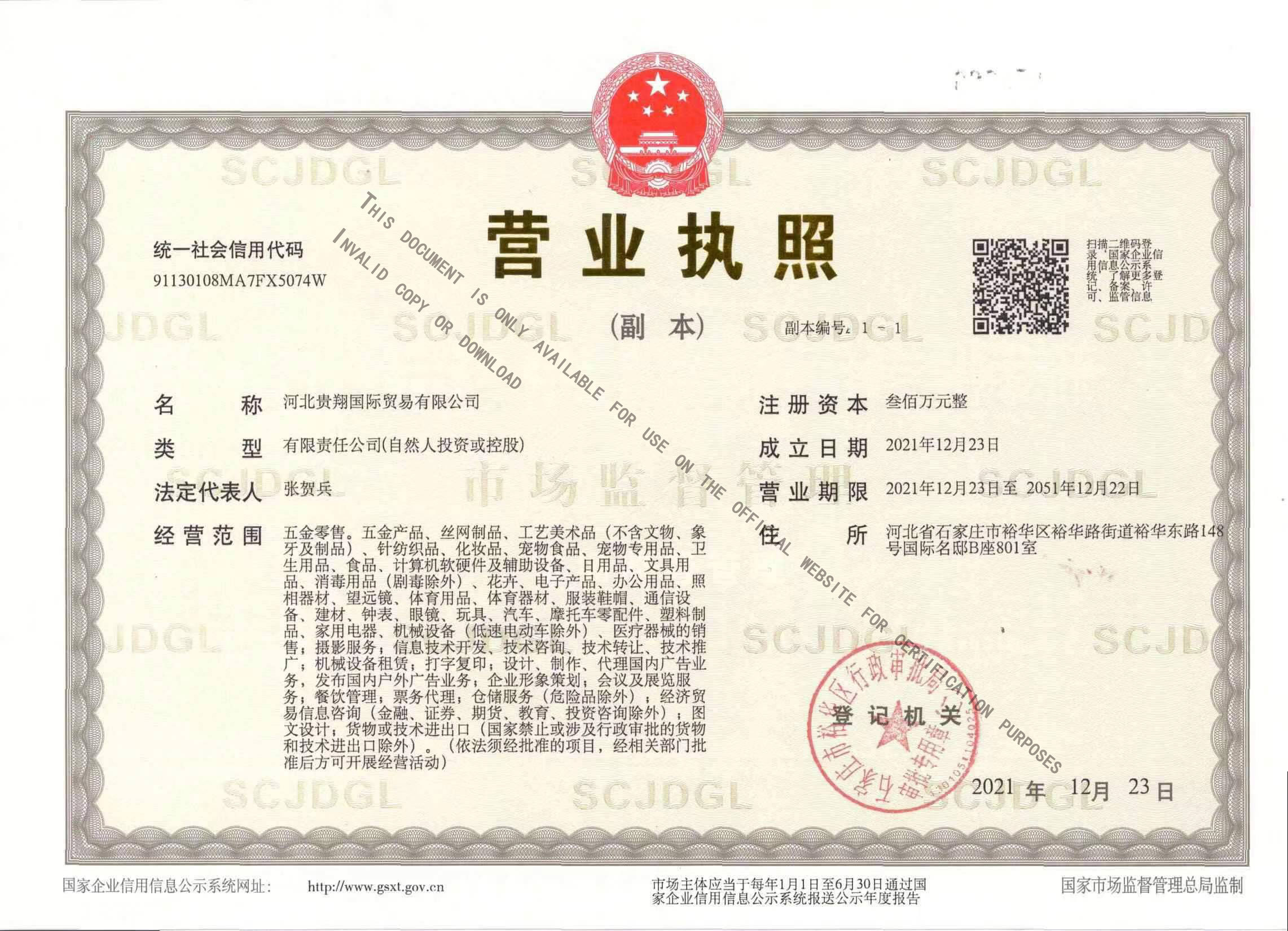
Hebei Guixiang International Trade Co., Ltd.
Add: Room 801, Building B, International Famous Residence, No. 148 Yuhua East Road
Zip code: 050000
Tel: +86-18331833286
Email: sales@gxwiremesh.com
Keywords: Welded Wire Mesh Supplier | Welded Wire Mesh Supplier | Welded Wire Mesh Supplier |
Welded Wire Mesh Supplier | Welded Wire Mesh Supplier
Wholesale Chain Link Fence | Wholesale Chain Link Fence | Wholesale Chain Link Fence |
Wholesale Chain Link Fence | Wholesale Chain Link Fence
Copyright © 2022 Hebei Guixiang International trade Ltd.
Powered by : 300.cn | SEO | City list | Business License